
Sintra is one of the best places in Portugal to travel with a group — and one of the trickiest to organise. The town sits in a forest on a hill, the streets are narrow and steep, the palaces sell timed tickets, and the good restaurants are small. Add three generations, a couple of toddlers, or six friends who each booked separately, and the day can unravel fast: split hotel rooms, mismatched breakfast times, someone always waiting for someone else.
This is the guide we give guests who write to us asking "we're a big group — how do we do Sintra without it turning into a logistics project?" It is honest about the trade-offs, and yes, it talks about why a whole house often beats a row of hotel rooms — but only where that is genuinely true.
Why a whole house makes sense for a group
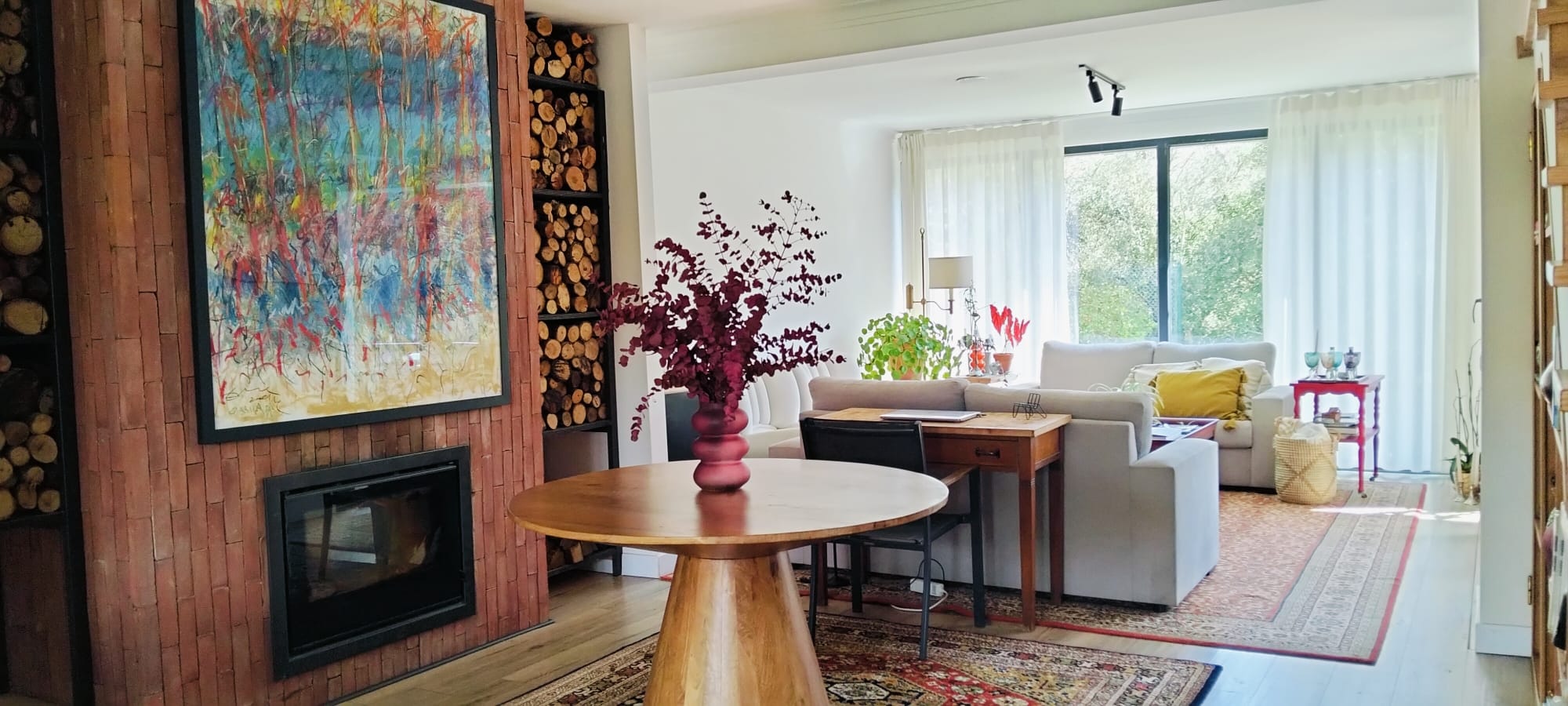
The maths of group travel is different from a couple's weekend. Book four or five hotel rooms and you are paying per room, per night, for space you only use to sleep — and you have no shared living room, no kitchen, and everyone scattered down a corridor. A private house pools that budget into one place with room to actually be together.
For families and groups, the practical wins are:
- One shared living space. Grandparents, parents and kids in the same room in the evening instead of texting between floors. This is the thing guests mention most.
- A kitchen. Early breakfast for the children, late dinner for the adults, a fridge for snacks and Colares wine. For a week, cooking a few meals in makes a real difference to the budget and to travelling with small kids on their own schedule.
- Arrive and leave on your own clock. No reception queue at check-in, no chasing four separate keycards, no breakfast that closes at 10:00.
- Cost per person, not per room. Split across a full group, a house you use fully often lands better per head than the equivalent rooms — especially once you factor in the meals you make at home. We won't quote a number here; run your own dates against a few hotel rooms and compare like for like.
Our entire villa is built exactly for this: over 125 m², three en-suite bedrooms plus a full self-contained apartment, in a quiet green part of Sintra with free parking and room to breathe — a calm base you reach by car, with the palaces and beaches a short drive away. It is the unit we point groups and families to first.
Where a hotel still wins: very short one-night stops, or groups who genuinely want zero shared responsibility and daily housekeeping. Be honest about which kind of trip yours is.
Things to do in Sintra with kids and groups
Sintra rewards a group that spreads things over two or three unhurried days rather than cramming everything into one. A few places work especially well across ages.
| Activity | Good for | Note |
|---|---|---|
| Quinta da Regaleira | Kids, teens, curious adults | The Initiation Well, tunnels and grottoes feel like an adventure playground — the group favourite for children |
| Pena Palace | All ages, first-timers | Go at opening; the walk up from the gate is long, a shuttle runs inside the park |
| Moorish Castle | Older kids, walkers | Ramparts with big views; uneven steps, not ideal for strollers |
| Praia Grande / Guincho | Beach days, teens, surfers | About 20–30 min by car; Atlantic water is cold and can be rough |
| Praia das Maçãs | Younger children | Calmer bay, restaurants nearby — the gentlest beach day |
| Serra de Sintra walks | Mixed groups, dog-friendly | Shaded forest trails; pick a short loop with little ones |
A few notes from experience. Quinta da Regaleira is the one children remember — the initiation wells and the network of tunnels are made for exploring, though keep an eye on toddlers near the well edges; our full Quinta da Regaleira guide has the details. Pena Palace is the postcard, and worth it, but the climb inside the park is real; go early. For a beach day, the Atlantic here is beautiful but cold and often has surf and currents — fine for teens and confident swimmers, whereas the calmer bay at Praia das Maçãs suits younger kids better. Always check current conditions and lifeguard flags on the day.
For a first outing, our one day in Sintra guide sets a sensible order; visiting Pena Palace covers tickets and timing; and beaches near Sintra has the full coast rundown.
Getting around as a group
The single hardest thing about Sintra by car is parking in the historic centre — it is very limited and the roads up to the palaces clog by late morning. That shapes how a group should move.
- One larger vehicle (a people-carrier or minivan) usually beats several cars — one thing to park, everyone together. But don't plan to drive it into the centre and leave it there all day.
- A base with its own parking changes this. With somewhere to leave the car, you skip the scramble for a space in town, then drive to the palaces and the coast on your own schedule.
- The train from Lisbon (Rossio or Oriente) reaches Sintra in roughly 40 minutes and avoids driving altogether — good for a group arriving without a car.
- Book monument tickets in advance, online, for a specific time slot. For a group this is not optional in high season — Pena and Regaleira can sell out, and buying for eight people at the gate is painful.
Feeding a group
Restaurants in central Sintra are small and popular, and walking a party of eight in without booking rarely ends well — reserve ahead, especially for dinner and for anywhere with a view. The other half of the answer is the kitchen back at the house: a big shared breakfast before heading out, a relaxed dinner in after a long day, and no negotiating over restaurant timings with tired children. Most groups we host settle into a rhythm of eating out for lunch near the sights and cooking a few dinners in. For exact opening hours, menus and whether a place takes large tables, check each restaurant's own page — those details change with the season.
The through-line for a Sintra group trip is simple: stay somewhere you can all gather, with space and parking of your own, book your palaces and your tables ahead, and give yourselves more than one day. Do that and Sintra stops being a logistics project and goes back to being what it should be — a few unhurried days in one of the most beautiful places in Portugal, spent together.


